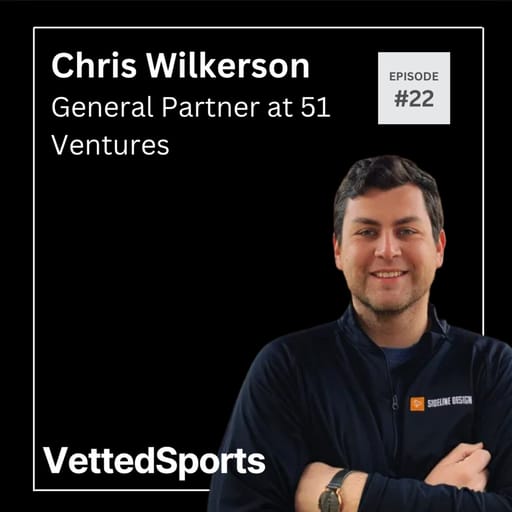
Transcript 0:00 [upbeat music] Chris, appreciate you joining, man. 0:13 I wanna, I wanna start here because obviously you are a former football player, um, who became an entrepreneur during your college days, which, you know, five, 10 years ago, that wasn't something that you seen a lot of athletes doing. 0:25 So, um, I'm curious to know, man, how did your athletic background and experience as a football player shape your mindset and your approach to entrepreneurship and business at such a young age? Yeah, man. 0:38 First of all, thanks for doing this. Um, this is, this is gonna be fun. Um, but yeah, when I was... When I went to college, I, I always jokingly tell everybody, um, you know, pre-NIL, right? 0:48 So you, you come from the opposite of money, which means no money, and you had to figure out a way to make money. So it was kind of one of those kinda like forces in you. 0:56 You know, you're already an athlete, you're competitive naturally, and it was just one of those things, I think, that ended up naturally taking over to the other side really early on, and that was kinda how I got started, um, and that was in college. 1:09 And then life after football, it almost became like this itch, like that was part of my personality, that was part of me and who I was, so I just never really lost it. 1:18 Now you see a lot of guys that start really early with that where, um, you definitely didn't see a lot of them starting with it in college like I was 10 years ago, right? 1:27 It just wasn't as, just wasn't as much of a thing. I remember getting kinda, you know, um, 1:32 the nudge of like the nerd sitting in the locker room with his laptop out, you know, coding and things like that before we had all the vibe coding platforms. 1:40 Um, so it just started early for me, honestly, and it just kinda became part of who I was. 1:46 Do you remember back then having like any mentors or, or examples of other athletes who were, uh, you know, entrepreneurs or, or more business-minded that you can kind of lean on or look to? 1:57 You know, uh, it's almost kinda like this controversial maybe in a sense of, you know, I hate saying Tom Brady because he was like... He was always the greatest, but he had his TB12 stuff that he was doing. 2:08 He was doing a lot of nutritional things off the field, and I was actually studying kinesiology at the time in college. That's what I studied. 2:14 So, um, it was one of those things where that naturally started to play an effect. It was like he was great on the field, and then off the field he was also doing really great things. 2:24 Even that was early for him still at that point in time. So I think I saw a lot of that naturally happen there. But again, there wasn't a ton of guys at that point in time, you know, this is circa 2014, '15, '16. Yeah. 2:36 Wasn't a ton, you know. A lot of them after football for sure started getting into the business side of things. Did you, did you experience... 2:45 'Cause obviously like athletes, um, a lot of them at times struggle with their identity. It's, it's, it's so tied to being an athlete. 2:53 Did you struggle with any type of identity c- like, crisis that, that most athletes experience when they're making that transition? Or was there like a kinda natural, um, 3:04 you know, association with entrepreneurship and you just felt like that was just another factor of who you, who you were? Did you always see yourself as like being multifaceted? You know, that's a good question. 3:14 I think every athlete, no matter at what level, you're gonna struggle with what that transition of after sports looks like, and even myself struggled in a sense with it because you're so tied to the game. 3:25 No matter what else you were doing, it was still like, "That's kind of who I am," you know? And that was definitely who I was. I let it identify me, which I don't recommend anybody let their sport identify who they are. 3:37 You should be multifaceted. You should do other things. And so for me it was a hard transition, but I also didn't have a ton of time to think about it, you know? Um, I didn't have a, a cushion to fall back on. 3:48 There was... It, it was you've gotta figure it out and you've gotta figure it out now, so you better keep trying to push forward. So I didn't have a ton of time to figure it out. 3:55 I can remember a few months where it was tough and kind of on the down end of some of my workouts and things with teams where it was kinda like I could feel it coming more than anything and knew, hey, this was gonna be the end of, of that part of my life. 4:10 So... Got you. Um, now obviously you've had two exits, man. Like, most people don't even [chuckles] have one. 4:18 Um, you know, as, as a, as a, as an entrepreneur, walk me through that process and some of the lessons that you learned from building businesses and then selling them afterwards. Yeah. I mean, I, I will say my... 4:32 One thing that I tell everybody about building a business now is, uh, start organized from the beginning. Don't have to try to organize everything at the end. I, I'll, I'll brief with that. 4:40 But, um, you know, it's, it's interesting. I've been very fortunate honestly, um, just to have done what I did, you know, with my first company in college, sell it just because of the niche that we were in. 4:52 Um, and then going after that with Sideline, you know, it was just one of those things where if you build something compelling enough, um, you've still gotta go sell it. It... 5:01 That you don't build something and they will come. That doesn't really work in this space. You've still gotta hit the ground, hit the pavement running and, you know, you kinda grind through that. 5:09 And I think that's what... 5:10 You know, when companies are looking to acquire a company or PE firms are looking to buy something, they're looking for something that, you know, somebody built a brand on, and they're just hoping to go apply money and then grow it from there. 5:22 So, uh, for me, honestly, my, my one thing about building it is go make all of the, the relationships in the world because that's how you're gonna build that company in the first place, right? 5:33 Like, my first one I really tried to do solo. You know, it was, it was really all about me. Then in Sideline, I really got more out there. 5:41 I met a lot of great people, a lot of people that could direct me in the right direction, um, that could help in certain areas of the business, that could help us grow in other parts, and set up partnerships with other companies that then eventually led to, um, offers and deals and acquisitions that, that we went down that road with. 5:58 Um, but I think it's just really being out there more than anything is, like, build the brand and build your personal brand and the company brand at the same time is, is a really big deal.Absolutely. I love that advice. 6:09 Um, one of the things I think is interesting about football is that, you know, it's, it, to me, one of the more complex sports. 6:15 There's a lot of moving parts, there's a lot of people involved, and there's a natural parallel with that in entrepreneurship. You know, it's the same kind of feel. 6:25 Um, I'm curious to, to hear your thoughts on, like, how football played a part in you hiring and building a team. Do you think there was like, uh... 6:34 What are some of the lessons or takeaways that you got from, from playing, you know, on a, on a football team with a lot of different moving parts and complexities and, and the, the parallels between that and, and building a startup and building a team around yourself? 6:45 Yeah. This is one of the most common questions, I think, when you talk about, like, the athlete moving over to a business person. 6:51 And, you know, if you look back, I think you're starting to talk about it-- people are starting to talk about it more now, but if you look back five, 10 years ago, people loved business owners, loved to hire collegiate athletes, former collegiate athletes. 7:02 I think there's a reason for it, right? 'Cause, you know, it's you gotta show up every day. You know, you have to put in the work every single day. Your scholarship's gonna go away if not, right? 7:10 You've gotta do it when nobody's looking. You've gotta do it in the summer when you're on vacations, when you're, um, on winter break, right, summer break, fall break, whatever it is. 7:18 You still gotta show up every day because the day that you go back to campus and y- all of a sudden you can't run your gassers anymore, I... You know, coaches notice, right? They know who's putting in the work over time. 7:31 And, and for me personally, on the business side of things, being a long snapper, being a specialist, it was kind of one of those things where there's a lot of highs and lows. 7:38 You know, um, for me, there was good days, there was bad days in snapping. There was a lot going on there where, you know, I had to go through-- [dog panting] my dogs. 7:49 [laughs] Um, to go through the mundane pieces of, you know, bad days, good days, whatever it might be, right? So it's the same thing in business. 8:00 There's highs, there's lows, there's good times, there's bad times, and you just gotta continue to work through that, and I think that was something that I really carried over a lot. Yeah, for sure. 8:10 Uh, let's talk about 51 Ventures, man. Like, what made you want to start your own venture fund and invest in sports tech startups? Like, where did that all come from for you? 8:19 Um, and you know, what-- even more so, like, what type of startups are catching your attention these days? Like, what's the focus with 51? Yeah. 8:28 So for me, personally, like, my thing was when I, when I started building-- I'll, I'll talk about Sideline specifically. When I started building that, it was one of those deals where, you know, 8:39 I felt like I knew best, right? And I think most founders, you should feel like you know best, right? You should know your market the best, right? 8:46 But I feel like I couldn't really get through to VC, to, you know, investors and things when I was talking and pitching, right? 8:53 Now, granted, I probably didn't have all the right, you know, credentials and the wording and, you know, everything super ironed out for what they were looking for, and that's one, one side of the puzzle. 9:02 But I also-- I just had this, like, deep understanding of, like, I knew what I knew. And, you know, I finally got to the people that could believe in me and did believe in me and wrote us checks and helped us get there. 9:14 But it was like beating my head against a wall, and it was always like that. And so I always felt like 9:21 access to capital was one of the most important things, and especially in this industry, 'cause you're kind of trying to survive for as long as you can before that time comes where you really ramp up, right? 9:32 This is a special industry in sports specifically. And so I wanted to be able to be that person on the other side of the table where I knew what it felt like to beat your head against a wall. 9:42 I could pick you out of a lineup that said, "That guy kinda reminds me of... That, that girl kinda reminds me of, of me." You know? 9:49 That was, that was that essence where it was like, if I could go find the mes of the world that didn't have the perfect pedigree, that didn't have the perfect background, that didn't have everything under the sun that a VC's trying to look for, but we could provide them some more resources. 10:02 Those things that I was like, "I just wish I had this. I just wish I had a little bit of money, couple more connections, a couple ins at a couple teams that would push us way over the edge." 10:14 Now, I had to go do most of that by myself, and then I got really lucky with some of the investors that did come along that introduced us along the way. But I was like, that was where it started, right? Mm-hmm. 10:24 And I was like, "I could really be that person for somebody." Mm-hmm. And what, what, what type of companies are you guys looking for? 10:30 Like, what sectors of sports tech are you bullish on or you see the most, like, long-term potential? Yeah. So I really love, um... I'll, I'll kind of break it down like this. Mm-hmm. 10:40 I think it is at the center of everything, and I want to-- I want data collection because I think data is the most important thing. When you talk about AI, good data, great data makes that product better. 10:49 When you talk about fan engagement, which is one of our elements, data makes that better because if you understand the fan, what-- the way that they want things, the way they wanna experience the setup, the way that they wanna move, then the data behind that is essence, is, is great essence. 11:04 And then on the athlete performance side, which is another one of ours. So fan engagement, athlete performance, and all centering around data collection. 11:11 So on the athlete performance side, whether it's on the field, mental, off the field, doesn't matter, we wanna go down those sectors as well. 11:19 And then, you know, obviously we're, we're starting to see this influx of, uh, sports funds from, from a broader perspective, uh, you know, start to emerge, you know, throughout the landscape. 11:31 Um, what, what, what do you think differentiates 51 Ventures from some of the other funds or firms that are out there? Yeah. 11:39 Uh, just to be real straightforward about it, like, I've been there, and I've been there most recently, right? 11:44 I've been in the founder's seat, and I think that was the whole driving force behind it, was we can enact real, real value. I, I'm not speaking from a, a lens of a traditional investor. 11:55 That's just not the way I'm gonna operate. Less than seven percent of actual founders that have built a company, raised capital, actually become, um, VCs, right? That actually become investors. 12:07 There's a reason for that, right? It's not the same kind of mode. It's not the same kind of thing.But also, those are the most successful returned funds as well, and there's a reason for that. 12:15 Because that deep experience, that understanding that we have, me and my team, we can supply the resources and things that we need at a lower cost, right? Like, we're the investor. 12:24 We're not here to-- Nobody's here to make money. 12:26 So I have my guys set up, and whether it's product development, marketing, business development, I've got guys that we can bring in strategically to that company and help grow that within it, right? 12:39 Without having to spend excess in capital to go hire the best in the business. We've already got the best in the business ready to go that have done this multiple times already. And so that was really our big play. 12:49 C-can you dive deeper into, um, some of the metrics that you guys look for? 12:54 Like, obviously, there's a b- a kind of a baseline that most investors wanna see as far as, like, the TAM and, you know, the, the return profile. 13:03 But, um, what are kinda some of those outliers that you guys look for, uh, w-within the startups or the founders that you're, that you're currently looking to invest in? 13:12 So, uh, um, actually, whether it's right, wrong, or in the middle, I always tell everybody the last thing I look at is the numbers, right? 13:19 That, that's really my last go-to, especially when you talk about sports because I wanna sit here and say that I understand the landscape, right? And I wanna understand, um, the way that we work in it. 13:29 So it's never really about the number. Now, we focus on pre-seed and seed stage from, like, the VC fund itself. 13:36 And our whole goal, I don't care if it's zero revenue, I don't care if it's, you know, four hundred, five hundred K in revenue. Once we get beyond some of that, maybe it's a little too late for us to come in. 13:47 There's a little more process that have been established. But really numbers are gonna be the last thing I look at. I wanna know that you're the perfect founder for this issue. 13:56 I want you to have some kind of experience in this realm, that it's like that's the perfect person to solve this problem, whether you were a coach, you were an admin, you lived this, right? You were a trainer. 14:05 You lived that area, and you are an expert at that, and you built this because you saw the pain point, and you know it better than anybody else. 14:12 And I think that's what I'm looking for more so than just the numbers that go behind it. 14:17 So we don't really stick to anything too strict other than maybe later on when you are doing a little bit too much revenue for us to get involved early enough. 14:25 But, um, at the same time, if you're the guy or the girl, you're the guy or the girl, you know, for it. So that's the way I think about it. I love it. That's really good advice. 14:34 And then, uh, last question when kinda thinking about founders and, and, um, investing in them, uh, what advice would you give to someone who's looking to get in front of you on how to pitch appropriately, how to get, gain investment or get in front of FiftyOne Ventures? 14:50 Like, general advice. Uh, to be honest with you, the, the ones that I have invested in, that we've invested in, um, we actually, we had longer relationships with. 15:01 It didn't come from one meeting to the next where it was like, "Okay, let's open up due diligence process and go down this path." It was, "Hey, what do you think? Hey, can I get your opinion? 15:10 Hey, can we talk through this? Here's our product. Here's more things. Here's sales. Here's what we're doing," and keeping us in the loop. 15:16 And then naturally over time, the relationship built where it was like, "Hey, I have a few connections for you." 15:21 And then we introduce that to, you know, some of the people that we know, some of the folks that we've got on our side. 15:26 And all of a sudden it naturally would happen where it's like, "This is really good, and we've got a few customers ready to go for it actually, so we should probably write a check." And- [laughs]... 15:35 it was this natural relationship that built over time that built into something really good on our side, where we brought value to the table when we came on board as well. 15:44 Build a relationship before you, you actually need to utilize it. Yeah. I love that. That's really good. 15:49 Um, looking towards the future of the sports tech space and some of the trends, like what are some of the things that you're kinda seeing on the horizon or some of the trends, um, or opportunities that you think people aren't really paying attention to or are kinda sleeping on right now? 16:06 Well, if you talk about tech in general though, I think that everybody's focused on the team league ownership right now. I think that's huge, right? And I've talked about this. 16:14 I put it in my newsletter a lot, that if we talk about what's under the hood, what's running the teams, what's behind the scenes going on, right? 16:22 And I, I stick to our guns on our thesis model of fan engagement and athlete performance, right? Because those are the two things that I know that can make a team or a league more valuable, right? 16:32 More viewership, more fan engagement, and better athletes performing better on the field inherently grows that asset that you've bought into from a team or league aspect. So those are the two centerpieces. 16:44 I think fan engagement, I probably talked about it a year ago. And, um, you know, you kinda get some looks, and you're like, "Oh, what's fan engagement really mean?" 16:51 And now I think everybody's wanting to talk about fan engagement because it's crucial, right? You talk about the collegiate aspect. You've really gotta turn everything to a revenue sharing type model. 17:00 You've gotta turn into where, you know, the athletes or the departments are making money from their fan ends, more like a professional team are, where they can actually generate revenue and then give that back to the athletes. 17:12 And then on the performance side, everything's gotta tie back to revenue somehow, right? No matter what it is, in my opinion. 17:19 So those two sectors, I, I believe that those will be the two that are the under the hood look. And, you know, we're obviously hearing a lot about, like, youth sports, women's sports. 17:30 Do you all see yourself possibly expanding into those verticals or opportunities such as, such as those in the, in the future? Yeah. 17:37 I think the beauty of those two thesis points for us is they span from pro all the way down to youth, right? You have fans, parents, things like that. 17:45 You also have performance, and starting that stuff at the young ages, um, I think that that can go a long way to the growth of the athlete over time as well. 17:52 So we really try to span the entire from pro, collegiate, to youth, um, high school, and everything in between as well in both. And then, you know, last couple questions we have before we wrap up. 18:04 Um, getting back to the athlete standpoint for a second because I think one of the things that's interesting is we are seeing a lot of athletes getting into investing, whether that is through angel route or syndicates is, is becoming a really big trend, um, these days. 18:17 What role do you think athletes, current and former, kinda play within s- you know, shaping the future of the sports business ecosystem, technology, and et cetera going forward? 18:28 You know, for a long time, um, and it's still true, that athletes obviously have, um, you know, a stage. They have their own-You know, presence, right? Everybody knows them as the athlete that they are. 18:40 And so I think that there's a lot to the marketing side when you talk about an athlete coming on board, whether it's an investable role or just an advisory role or an influencer role with a company. 18:52 It's super, super vital. Um, but I think something that gets overlooked, I know a lot of athletes that are very active, 19:00 these guys are a lot more intelligent than I think some of the, some of the crowd gives them credit for. Um, and I think that there's a lot more value in things that they've seen and know and heard through their years. 19:11 I mean, you gotta think they've been at the most elite level of sports. They've also-- that's the most elite level of business as well. They've definitely heard and seen and been a part of other things. 19:21 I think that, you know, don't just look at them for their name, image, and likeness, if you will. 19:25 Look at them for what they might actually know, and I do think that that's a really big deal because a lot of these athletes are really intelligent and have some really good chops on them for a business, so. 19:36 You-- I mean, and, and you've given some great advice to founders before. 19:40 An athlete who's looking to get into investing and maybe go the venture route, um, what advice would you give them on how to, uh, go about, you know, launching their own fund and, and getting into that, into that ecosystem? 19:54 I would recommend, um, and it's the advice that I was given early too, was don't write your first check on the first company you talk to. 20:02 Um, talk to ten, talk to twenty, talk to fifty, talk to a hundred, and then you'll start to pick up on things. 20:08 You'll start to understand like where the good ones lie and where the maybe not so good ones lie, and what those differences are and what sets different things apart and what those markers can be that you can focus in on. 20:19 And I think once you can understand that, then get your feet wet, understand like what those timelines look like from a business aspect. Like where it's like, "Hey, I'm writing this check. 20:28 What do I expect out of the term? What's the next round look like? Where's my dilution?" 20:33 Different elements that go into that, um, and how you can portray yourself and put yourself at the forefront through many various things that happen in the investment components. 20:43 Um, so just really dive in and don't write your first check right away. [laughs] Just live a little, like see it all, and then grow and, and go beyond that. I like that. Um, last question, man. 20:54 I know you're a football guy, but looking at, um, the, the gro- the global ecosystem of sports, if you had unlimited resources and capital and there was only one sport you can bet on, what, what sport would that be, and why? 21:08 Um, if I had unlimited, I-- it would probably be soccer to be totally honest because I've, I've always known it to be huge overseas and in pretty much every other country. 21:20 And the funny part is, is that we always talk about how the US is the biggest market to get into. 21:26 Once you can get into the US market with a tech product from overseas, you're, you're gonna master, you're gonna be the granddaddy of them all, right? 21:34 I wanna say it's the same way for the sport itself, and I think you're just now seeing the cusp of like it really coming to the US and being a dominant sport. 21:43 I know it's a little bit later, you know, obviously it's been around and everybody knows about it for the most part, but you would be amazed how many people don't watch soccer yet, aren't invested in soccer yet, and haven't really realized its true potential yet in the States. 21:55 And so I think it's gonna explode here after we've got, um, World Cup and everything coming up in the future here. So I expect it to take a pretty hard turn. I love it. Chris, appreciate your time, man. 22:05 Lastly, can you let people know where they can find more about you and FiftyOne Ventures as well? Yeah, man. Just find me on LinkedIn. That's pretty much where I spend all of my time. That's the best route for me. 22:14 Um, try to keep up so. Appreciate you, brother. All right, bro. Appreciate you, man. 22:20 [outro music]