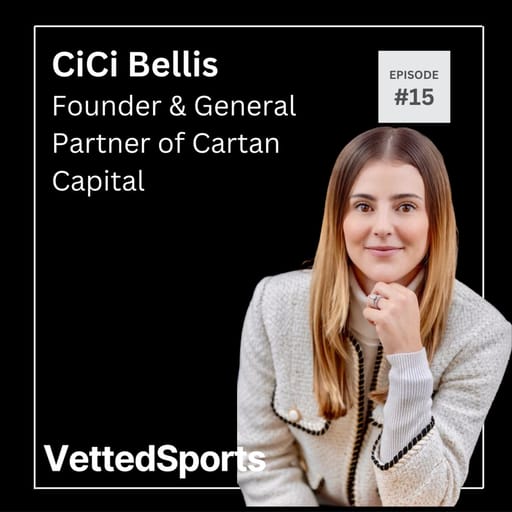
Transcript 0:00 [ on-hold music] DC, first off, thank you for joining. 0:13 Um, as I said, you know, before we got on camera, I feel like this has been, uh, you know, a long time coming, and it's an honor to have you on the show. 0:20 Um, but I- I wanna start and kinda take a step back, uh, to talk about your tennis career, you know, where, where this kinda all started. 0:27 Uh, what was it like for you being fifteen years old and, and playing in the, it was the twenty fourteen US Open? 'Cause when I think about when I was fifteen, I was like... 0:36 I could barely leave my hometown- [laughs] -let alone play, you know, on a, on a pro-level tour. So what was that experience like for you? Yeah. Well, first of all, thanks for having me on. 0:44 Definitely, definitely a long time coming, so excited to be here. Um, but yeah, no, it was, it was crazy. It was one of the first pro tournaments that I ever played. 0:51 I got a wild card into the event because I won our, like, junior national tournament, and every winner of that gets a wild card into the US Open. 0:58 So it was, um, you know, random I guess, kind of, that I was playing at that time just, um, with a wild card. 1:04 But yeah, it was, it was crazy, you know, being that young and, and playing on a, you know, massive stage like that, especially with having pretty much no experience prior, um, in terms of pro tournaments. 1:15 So it was, it was wild, and it was, you know, crazy with, uh, kinda my first experience with press and media and everything. 1:22 And, um, yeah, it was, it was a lot for a fifteen-year-old for sure, but it was, it was awesome. What, what would you say is, like, your most memorable experience from your, your professional te- tennis career? 1:34 Gosh, that's a tough one. Uh, that one's up there for sure, I think just because it was one of my first. Um, and then I think, you know, honestly playing all the Grand Slams were, were such great experiences. 1:46 US Open was, was definitely my favorite tournament, so definitely, uh, you know, was grateful every time I got to play there and, and cherish the memories of, of that tournament for sure, I think the most. 1:56 But yeah, I mean, you know, I think I, I won one WTA title, so that was-- that's up there for me as well. But, um, yeah, playing at a home slam, I think it doesn't get better than that, for sure. Yeah. Absolutely. 2:07 And when did this idea of, like, life after tennis kinda creep in for you? 2:11 'Cause, like most athletes, I think about my athletic career, like, I didn't really start to think about what I wanted to do after playing basketball until I was, like, on the back end of my career. 2:18 So was there- Yeah...like, a moment or an experience that you had during your playing career that started to kinda get the wheels turning about, like, what life after sports looked like for you? Yeah. 2:27 It's a good question. 2:28 I think, you know, growing up, uh, school was such a big part of my life and my education was, so that was always, um, a huge focus for me, you know, something I didn't really wanna give up even though I was playing professional. 2:39 So I knew that I always wanted to kind of, like, continue my education, um, you know, while I was playing and, and, you know, not kinda make the decision. 2:48 A lot of, a lot of, you know, tennis players nowadays have to kinda make a decision of, oh, am I gonna go to college or go pro and, you know, be able to, um, uh, kinda, like, bet on yourself, I guess, but leave, leave a lot behind. 3:00 And I was lucky enough that the year I turned pro, um, the WTA partnered with Indiana University, so got to complete my degree online with them, which was great, um, just to have that kinda safety net. 3:09 Because, you know, always in the back of my mind I knew, you know, I'm not the biggest, you know, player out there, I'm not, you know, um, able to compete, I would say, like, physically as easily as some of the other girls out there. 3:20 So, um, you know, in case anything happened was, was, uh, you know, happy to have that safety net. 3:24 And, you know, had a ton of wrist and elbow injuries throughout my career and, um, a few surgeries and, you know, never really was the same after my last surgery. 3:32 So I feel like it was a period of, of, uh, maybe like four or five months where I kinda had it in the back of my mind where I was like, "Hey, you know, this isn't really feeling the same. It's not really working out. 3:42 I'm still in pain, you know, let me see kinda what else is out there." So I feel like it was kind of a long time coming in a sense because I had those injuries for a little while. But, um, I kinda gave myself a window. 3:52 I was like, "Okay, if I'm not gonna feel 100% by, you know, this date, then I'm gonna try something new." So it was kind of a, it was kind of a long time coming, I would say. Yeah, absolutely. 4:01 And for you, when did venture capital kinda come into the mix? Because most athletes, I would, you know, imagine, like we see a lot of athletes get into media or coaching or training in some capacity. 4:11 Venture, you know, or, or, you know, investing in some capacity is not really talked about as much. 4:17 Uh, we're seeing it a little bit more today, but, um, I would say even like ten years ago, we didn't see a lot of athletes kinda getting into that lane. So why, why venture capital? Why investing for you? Yeah. 4:27 That, that's a great question. So I, I grew up in the Silicon Valley, so was around VC from a really young age and it always interested me. 4:33 Actually, funny enough, um, I always wanted to get into VC if college was gonna be the path for me tennis-wise. Um, obviously, uh, pro was my path that I, that I chose. 4:43 Um, but, you know, right when I stopped playing, got an internship with, um, actually a, a family office, uh, nearby where I was training. 4:52 One of the weeks that I was there, I went over to their joint venture partner, which was a sports and health, um, focused venture firm, an earlier stage one, and absolutely loved it. 5:00 Kinda opened my eyes to the more, you know, niche areas of venture and not just, you know, from Silicon Valley general tech, like investing was pretty much all I, I knew of, of VC. 5:09 Um, and so opened my eyes to, to sports, um, investing and, and early stage investing and felt like it was the, the perfect kinda path for me post-tennis. So I was really lucky to have that opportunity. 5:19 Are there any, like, specific lessons or things that you learned as an athlete that play a role in, uh, investing, in, in, in venture capital and what you're doing today? 5:29 Um, like, are there any specific takeaways you can think about or synergies between the both, uh, both lanes? I think there's so many, for sure. 5:37 Um, I mean, you know, even when I was getting into venture, I was almost self-conscious a little bit because I, I knew I didn't have, like, typical work experience going into that, and I just had, you know, training and athletic experience and competing experience. 5:50 But so many of those traits really, really do kind of fall into, into investing and, and just the sports, like, business ecosystem. 5:57 I mean, you know, for me, um, I initially had that internship, and I knew that I needed to spend, you know, hours and hours and hours, you know, every single day, you know, post-work just to make sure I was up to speed on everything that they were talking about. 6:09 I knew, you know, the acronyms [chuckles] that they were- Yeah...mentioning. I knew everything going on. 6:13 And, um, you know, I think that kind of, um, gritty kind of like determination was what kind of got me, um, initially involved in venture. 6:22 And, you know, even now, like, there are so many different pieces to my day where I feel like I can take, um, traits that I learned, you know, whether it's, uh, resilience or, or even, um, you know, making sure that we're ne- not leaving any stones unturned in diligence on a deal and being gritty and, you know, kind of that, that same athletic kinda training mindset, bringing o- bringing that over to, um, to venture. 6:44 Just investing in general, I think there's, there's a ton of different synergies.Take, take me back to the inception of Carton Capital, your fund. Like, what made you wanna start doing your own thing? 6:54 Because obviously, given your experience, given your notoriety as an athlete, you coulda joined another fund, you, you coulda did a variety of different things. So why did you wanna start your own fund? 7:03 'Cause it's, you know, a- as I hear it, you know, it's, it's very, very challenging path. You're fundraising, you're investing, there's a lot of moving parts. So what about that process was appealing for you? Yeah. 7:14 You know, I always say I feel like it's kinda... it was the budding athlete in me, the kinda like athlete, entrepreneur type, um, mindset that started kinda budding, budding through. But I'm... 7:24 [audio static] you know, honestly, you know, I, I was working at that, at that sports tech-focused fund and, and loving it and love the team there, love my experience there, and, um, you know, felt like I, I wanted to build something on my own and really got that kinda entrepreneurial itch. 7:35 I'm sure really it was that, you know, kinda athlete mindset. 7:38 You know, I, as an athlete, and you know this better than anyone as well, like you are, you know, the CEO of your body, your team, your performance, like you're managing everything. 7:47 I wanted to build something and manage it and own it and, you know, be responsible for the wins, the losses, and have everything fall on me. Um, and yeah, that, that's really what, what kinda pushed me to do it. 7:58 Saw a broader kind of like opportunity in the space of investing, you know, not only in sports, but, you know, alongside sports and, you know, health and wellness and kind of like non-technical areas of health, and, um, kinda the adjacencies to the sports market. 8:10 So wanted to, wanted to build on that thesis and, and build something on my own. You, you... 8:15 Um, obviously you just kinda alluded to this, but I wanna talk about forming that thesis and like the opportunities that you all are looking for. 8:21 Like, what does that kinda look like o- from a, I guess a, a, a deeper level perspective, like the type of companies that you all are most interested in at the moment? Yeah, absolutely. 8:32 So on the sports side, we invest in kind of like broader, we call it like human performance is what everyone's using now, but that really boils down to, you know, sports, health, wellness, performance type, type companies. 8:42 Um, on the sports side for us, you know, we're, we're really broad in terms of what we like to look at in, in our thesis. 8:47 So we'll look at most things that touch sports from, you know, sports performance to, you know, data and analytics to, um, fan engagement to, you know, like what's the next generation of sports viewership look like and streaming and broadcasting. 9:01 Um, we, we look at everything under NIL. We'll look at betting. We'll look at really anything across sports. 9:06 And what's, what's funny and what I actually came to learn even when I started in, in like sports VC is a lot of the sports performance, um, companies out there I actually tried when I was an athlete. 9:18 Um, and I'd come across these companies and I'd be like, "Gosh, this looks so familiar. Where have I tried this?" 9:22 And I, I trained at our national tennis center my whole career, and they were very like forward-thinking with trying new tech. 9:28 And so I felt like every week I was trying a new, you know, piece of tech to see if it would, you know, help the performance or, you know, give me that 1% edge that I was looking for. 9:36 And so feel like I have a, a funny kind of perspective on that, just being, um, someone who, who've used a lot of the products, um, which is, which is fun. But that's on the, on the sports side. 9:46 We're seeing a lot of opportunities, um, I would say in sports with, with kind of like sports viewership and what is, you know, the next generation, Gen Z wanna... or how they wanna consume sports. 9:56 Um, so we're super interested in that. 9:58 Um, and then on the health side, you know, I would say we, we tend to stay away from, you know, biotech, pharmaceuticals, kinda anything that requires, you know, clinical trials, um, for a variety of reasons. 10:09 We, we stay more on the side of, um, what we like to call the non-technical side of health. 10:13 So, you know, wellness, fitness, nutrition, longevity, recovery, preventative health, femtech are kinda areas that we, we love to look at. 10:20 I think our main, um, focus right now is, is preventative health and, and holistic health and kind of moving away from, um, kind of the historical way that we've treated, um, you know, health conditions in more of a reactive way, and kind of being more proactive about it, and that can encompass so many different things, um, and so many different of those kind of pillars that I mentioned. 10:41 So doesn't have to have a sports element, but a lot of times it, it does just by nature. And a good example, we have one company in our portfolio that's in the gut health and microbiome space. 10:51 And, you know, from the surface, you would think, oh, you know, they have nothing to do with sports, but, you know, one of the main categories that they treat, um, and... 10:59 or I guess one of their main like customer groups is athletes, and we've been able to, you know, help them a lot on, on that front. 11:04 So it's, it's kind of nice to see that there is, you know, there are so many synergies even on the, um, on the health side where you wouldn't think that there's, you know, any tie to sports or anything like that. Yeah. 11:14 You know, a lot of... 11:15 most of the time in our portfolio we do see those ties, which is, which is great for us too, 'cause that's, you know, where we can support the most in terms of, you know, our network and, and, um, connections in the space. 11:24 But yeah, those are kinda some of the, the main thesis areas that we like to look at. For sure. 11:29 And, you know, obviously, I think for most investors, there's kind of a baseline of criteria that makes them excited when they're looking at an opportunity, like the founding team, you know, it's scalable, product market fit, et cetera, et cetera. 11:40 Are there any outliers outside of that that kinda match the criteria for what sh- gets you all most excited when you're looking at any founder or, or startup opportunity? Yeah. It's a, it's a really good question. 11:51 So we, we typically look at Series A. We'll look at some later stage seed companies as well. I think, you know, for us, we're an emerging fund. We want to be able to build, you know, a strong track record in the future. 12:03 Um, we're not investing in companies that are kinda pre go-to-market, um, for a few reasons. Um, number one, I think even like a tiny bit of traction tells you so much about the company. 12:15 And what we always like to say and what, you know... We have a group of interns at, at all times. 12:19 We have different cohorts that come in, and one of the main things that, you know, we tell them when they're speaking to startups or even researching startups is if they can find a company with, you know, 100 incredibly loyal customers that would like die for this brand or find so much use out of whatever they're, they're providing, that's so much more valuable than like 1,000 customers that are, you know, half-engaged, don't really care about it, you know, things like that. 12:42 So I think-Finding those companies that have a, like, you know, fan base of, of, you know, really kind of active, um, customers at an early stage, no matter, you know, what stage they're at or how many customers it is, I think there's so many network effects that can come into play, you know, once you have that, like, really strong kind of initial loyal base. 13:04 So I think that's something that, you know, is outside of the typical things that, you know, you would look for, um, kind of on paper. 13:11 But we definitely like to, like to see that and like to see those kind of like diehard, you know, customers. 13:15 And, you know, for me, that, that was s- when I was an athlete, you know, I had certain performance, um, you know, companies that I was, you know, a diehard supporter of, that I loved, and those were-- those would be the things that, you know, we'd be super excited about backing. 13:29 Yeah. 13:29 And obviously, like, investing and I think, uh, from a founder perspective, like trying to get investor, uh, interested in your company is largely l- relationship driven, and I'm sure you get a lot of pitches, a lot of founders reaching out. 13:42 Um, how can a founder, you know, who's listening to this break through the noise and get your attention? 13:47 Is there any tips or advice you can ha- like, give them on, on how to, um, you know, get in front of you and, and, and get, get them-- get your interest in their product or their company? Totally, yeah. 13:58 In, in terms of, like, getting in front of us, we actually, and whether it's myself or my team, we look at every single inbound that we get, and we try to respond to every single one. 14:06 Um, so we, we try and take pride in that as much as possible 'cause we wanna, we wanna support, you know, the sports ecosystem, the health ecosystem and its founders no matter if we're investing or not, um, which is what we, what we try and, um, take to heart. 14:19 But yeah, in terms of, of standing out, I think, um, what's great about the sports ecosystem is that it's growing so much. There's so many tailwinds. There's so much hype around it right now. 14:29 Um, there are definitely spaces that we feel like are super saturated, and we're seeing kind of the same solution over and over, kind of maybe a slightly different take. 14:37 Um, we love founders that can have a different view on the sports market that we haven't thought of or that we haven't seen before. Um, maybe it's a different perspective. 14:47 Maybe they have a background that can, um, give them, like, you know, more interesting insights about a space or, you know, can look at it a different way. I think that's something that, that we're super excited about. 14:57 And, you know, a lot of the, the founders that we back have, you know, previously started companies in the space or have, um, you know, worked at a bunch of different, you know, Fortune 500s in the space that can then be potential clients down the road. 15:13 Like, those types of kind of like, um, interesting founder attributes I think are, are interesting for us. And we, we want different takes on the space. We don't think we're experts at all. 15:23 We want the founder to, you know, tell us what's going on, tell us, you know, how the space is gonna evolve, and obviously, we'll, um, you know, kind of, uh, form our own opinions about it as well. 15:33 But, you know, I think it's, it's finding those founders and companies that are, are looking at it, at the spaces differently, for sure. Yeah. That's good, uh, that's good insight. 15:41 Um, and getting back to the health angle for a moment 'cause you talked about how, you know, you, you invest in companies that not ne- don't necessarily y- you know, have a sports angle or you can't really see the connection, but I think when you look at the general scope of, um, you know, uh, th- trends and, and how things are formulating in, in today's society, we're seeing, you know, how health and, and sports is converging a little bit more and, and impacting one another. 16:07 So why do you think there is such a big, um, convergence between those two sectors right now in this, in this day and age? Yeah. That's a, that's a great question and, and totally agree. 16:17 I think we're, we're seeing that more and more and just, um, we'll continue to see that honestly, I think, um, for a long time in the future. And I think one of it is awareness. 16:25 I think consumers and just people in general are more aware of their own health, more aware of what affects their health, their longevity. There are a lot more biohackers out there than we had ten years ago. 16:37 Um, so I think there's more of a focus on, um, kind of preventative health and longevity than we, than we had, you know, five, ten years ago. Um, so I think that's a huge tailwind in the space. 16:48 And then, um, you know, that, that does tie a lot of the times into performance. 16:52 I think, you know, we've seen how fitness and just athletics in general, um, you know, boosts someone's health and, you know, how important it is to be active, athletic, um, different types of, you know, working out can affect your, you know, health in, in different ways. 17:08 And so I think people are becoming more and more aware of, you know, what they can do to extend their life and then also just, um, you know, have better years and, and healthier years. 17:18 So I think the convergence of sports kind of performance and athletic performance and fitness with, you know, that tying into, um, longevity and preventative health and, and people being just more aware of, of their health and, you know, we have so many solutions out there that are telling us so much about our health. 17:36 I'm a Whoop wearer. Like, I've-- I know every data point every single day, and I'm, you know, super into stuff like that. 17:41 So I think there are, there are definitely more people out there that are, um, you know, just becoming more aware of that. 17:46 And then I think on the flip side, you know, um, care and the care economy is chaining so-- ch- changing so much in health. 17:53 So I think they are shifting more from, um, kind of reactive care to, to try and hopefully, there-- we've seen it a few, in a few, um, in a few areas, but we're-- we've seen, you know, more health organizations and kind of like, um, groups try and shift to a more kind of like proactive, preventative, um, model. 18:14 Obviously, in- insurance is a big, um, factor that comes into this, but, you know, we're, we are seeing somewhat of a shift as well. Yeah. No, that's a, another really good piece of, uh, you know, insight. 18:25 Um, when you think about athletes getting into the, the venture space, obviously we're seeing a new wave of athletes wanting to invest, whether that is from a, from a, you know, venture partner perspective or angel invest. 18:36 What advice would you give an athlete who's looking to get into this space? 18:41 Oh my gosh, I, I think athletes just bring such an [laughs] definitely biased here, but I think athletes bring a, such a great perspective, um, to the venture space. 18:49 I think advice would bePartner with some startups in this space that are super excited to have, you know, an athlete on board for obviously a variety of reasons. 19:01 Start to understand business models, start to understand how these startups operate. You know, athletes' networks are so vast, and that's obviously somewhere where they can seriously support. 19:11 Um, and obviously we've seen case studies of like the, you know, mega popular athletes be able to, you know, promote the, the companies and have, you know, insane ROI on, on different kind of, um, investments that they've made. 19:24 But I think, you know, the day-to-day athlete, you know, myself, I wasn't, you know, one of the crazy top, um, tennis players in the world. I think, you know, we can bring a different perspective to the space. 19:36 We can bring, you know, obviously our, our network to the space. But athletes in general just dive into it. I think there's no better advice than, than dive in. 19:45 Start to work closely with some of, some of these companies so you can understand, you know, how the, how the space operates and just the venture landscape operates. 19:52 And, um, you know, these startups, especially in the sports space, are so eager to have athletes on board, whether it's as an advisor or even, you know, someone that can, um, you know, they can just rely on, um, even if it's not in a like a formal agreement. 20:06 And you, you get integrated into this space pretty quickly, honestly. So I think just getting kind of reps of, you know, seeing these startups and working with these startups is, is gonna be their best friend. 20:15 Yeah, for sure. For sure. Uh, last couple questions before we wrap up. 20:19 Uh, if you, if you could wave a magic wand and solve any pain point or problem within the sports business world or athlete health, what problem would that be? Wow, that's such a great question. Um, 20:36 I would say within sports, I think from like an athlete's perspective, not even going into business, but from an athlete's perspective, I think scheduling is such a, such a tough issue, and I'm sure you had this, um, when, when you were playing too. 20:49 Um, for tennis at least, you know, we, we have such scheduling issues. Our season is so long. Um, and I think for, you know, most other sports, schedule could be optimized for athletes, like longevity and health. 21:00 Um, and you know, I think we're seeing more and more injuries in tennis, I'm sure in other sports as well. Like, I think that's a, that's a huge pain, pain point for us. So I, I hope we can get the scheduling down. 21:10 Um, I sit on the board of our national tennis governing body, so I'm, I'm working to, to hopefully make some changes there. Um, and so I think, you know, scheduling's a pain point. 21:19 And then in health, um, I touched on this already, but really seeing that shift to, you know, preventative health and, um, hopefully figuring out ways that, um, you know, insurance can still be a profitable, profitable business even if, you know, hospitals are, um, you know, kind of shifting their model to, to help, um, patients more. 21:36 So I guess that was on the health side. But sports definitely, um, schedule management. I love that. I love that. Um, five years from now when you look at Carton Capital, um, what, what do you want it to look like? 21:47 What kind of legacy do you wanna leave behind? Yeah, that's a, that's a good question. I think- [clears throat]... you know, love to see, you know, another fund under our belt for sure. 21:55 Um, maybe operating out of a, a third one. Um, that'd be great. And you know, for us, we, we really prioritize like our relationships with our startups. 22:03 We don't have a massive portfolio for, you know, our AUM that we have. We really want like to work closely with these startups. 22:10 We don't lead, um, investor rounds, but we wanna operate, you know, as in support as, as much as a lead investor would. 22:17 Um, so kind of partnering with, you know, really awesome people, trying to support their vision and their mission, um, is kind of the best thing that, that I can hope for and, and hopefully, you know, we, we hit some, uh, some awesome ones along the way for sure. 22:30 Thank you. CeCe, this has been great. Uh, lastly, can you let everybody know where they can learn more about Carton Capital, you, and, and everything you all are doing? Yeah, for sure. 22:38 Um, so cartoncapital.com is our, is our website. Can, you know, learn more about us. Um, pitch us if you're a startup. You can, um, uh, hop onto our, our form message there. Um, also reach out to me on LinkedIn. 22:51 I'm pretty active on there. Um, just CeCe Bellis. And then yeah, we've got our whole team on LinkedIn as well, so yeah. Thank you, CeCe. Appreciate your time. Awesome. Yeah, of course. 23:03 [outro music]